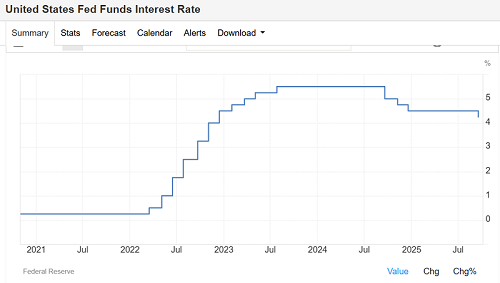
Fed action: They cut rates 0.25% on Sept 17 and signaled two more cuts likely (October & December).
Why it matters: Easing monetary policy by central banks lifts the stock market without fail—and can push consumer prices higher over time.
The details: What happened?
The US government released the Consumer Price Index inflation report. Headline inflation rose a bit to 2.9% (from 2.7%). Core inflation stayed at 3.1%.
The Fed still cut interest rates by 0.25% on Sept 17. That was expected.- The Fed’s forecasts now show more rate cuts this year—likely in October and December. That would push the fed funds rate from about 4.5% down to 3.75%.
Think of this like a car: inflation is the hill we’re trying to coast down. The Fed was braking hard to slow us. Now they are easing off the brake a little—to stop the engine from overheating (the labor market).
Why the Fed is cutting even though inflation is above 2%
Two main reasons:
They think the inflation increase is probably temporary (they used the word transitory).
The labor market is weakening—job revisions showed fewer jobs created than we thought, and unemployment trends worry them. They don’t want a big dip in jobs.
Analogy: If your house is on fire (inflation) but your kid is sick (jobs), you might call the plumber and the doctor. The Fed is trying to balance both.
Producer prices fell—why that helps-
The Producer Price Index (PPI) unexpectedly dropped in August.
Lower PPI can mean less pressure down the pipeline for consumer prices later. That gives the Fed cover to cut rates further.
A few key risks and realities
Easier money = more liquidity in markets. That often helps stocks and crypt0.
History shows markets often move higher after a rate-cut cycle starts. Examples from past cycles:
By year end, after a rate-cut start, markets were up ~77% of the time.
One year out, historical averages showed strong gains (past performance is not a promise for the future).
If markets fall hard (e.g., >20%), the Fed and government will likely act quickly to stabilize things. That usually creates fast recoveries—but not before some pain for leveraged investors.
Simple metaphor: Rate cuts are like giving the economy a sugar rush. Prices (and asset values) often pop up. Too much sugar long-term can cause problems.
What I’m watching right now-
Jobs data and monthly inflation (CPI & PPI).-
Fed communications—are they meeting-by-meeting or on autopilot? They say meeting by meeting, but language matters.
The U.S. dollar direction: a weaker dollar. Money supply trends—more supply tends to lift asset prices and consumer prices over time.
Practical portfolio notes
Not chasing short-term FOMO moves. Markets move fast in these cycles.
Avoid excess margin or overly large bets that could be wiped out in a pullback. Margin is a roller coaster you may not want to ride right now. 🎢
Steady strategy to reduce timing risk in a bullish market = cost averaging and strategic asset allocation
Things are expected to keep on going up, but they are not going to go up in a straight line. So if there’s a correction or a dip, just take advantage.
I’ll keep you updated as usual. Thank you for the support, and I wish you a very nice day. Take care.